Voidnotes.com Presents: |
My pond ecosystem from the sky above to the deepest mud.Air | Muddy Margins | Water Surface | Sunny Shelf | Mid Pond | In the Weeds | Siltly Bottom |
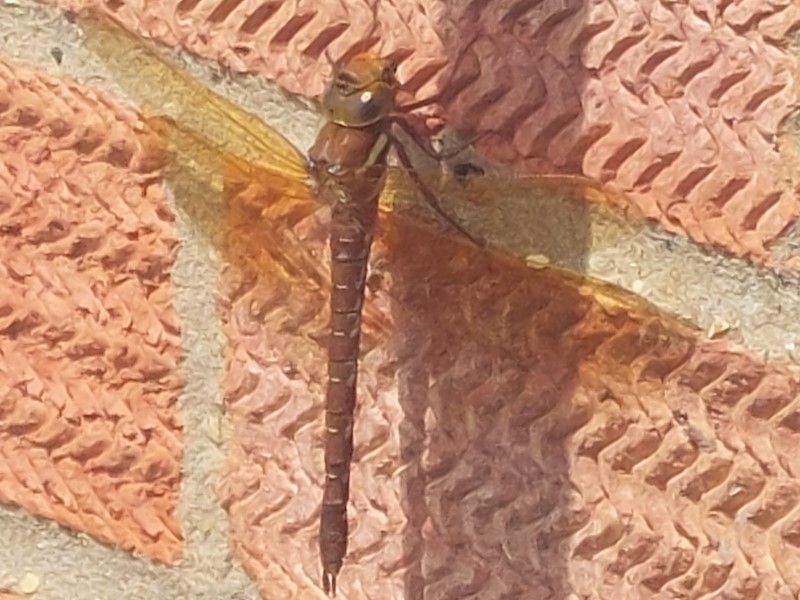
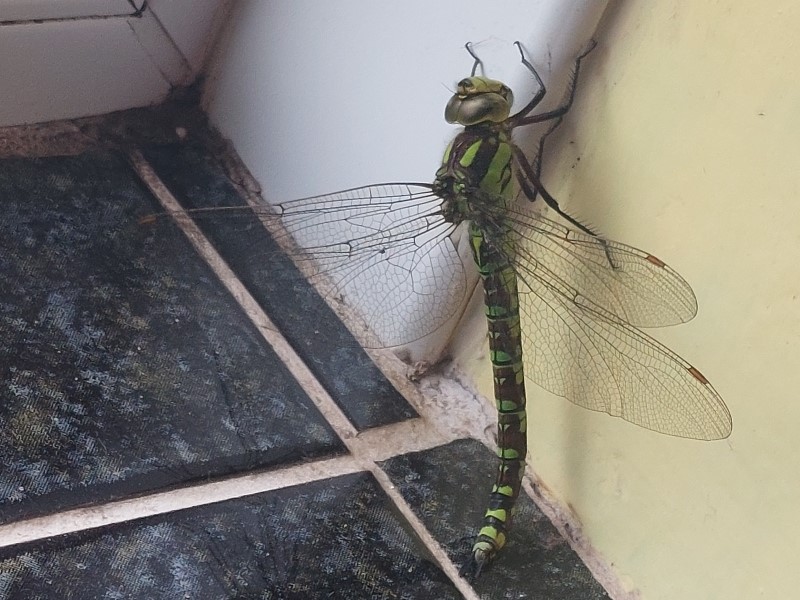
Hovering above:Many insects lay their eggs in the water.The easiest to notice are the Dragonflies and Damselflies with their larger sizes and beautiful colours. I've seen Large Red Damselflies hatching from larval husks and drying their wings. Deep in the silt are Broad Bodied Chaser larva that have come up to the water edge in early April but I have never seen an adult. In theory there will also be lacewings or other bugs are laying eggs in my pond but I've not seen any yet. Mayflies cluster around the water at dusk in their courtship dance. The females drop their eggs into the water to start the lifecycle again.
|
||
|
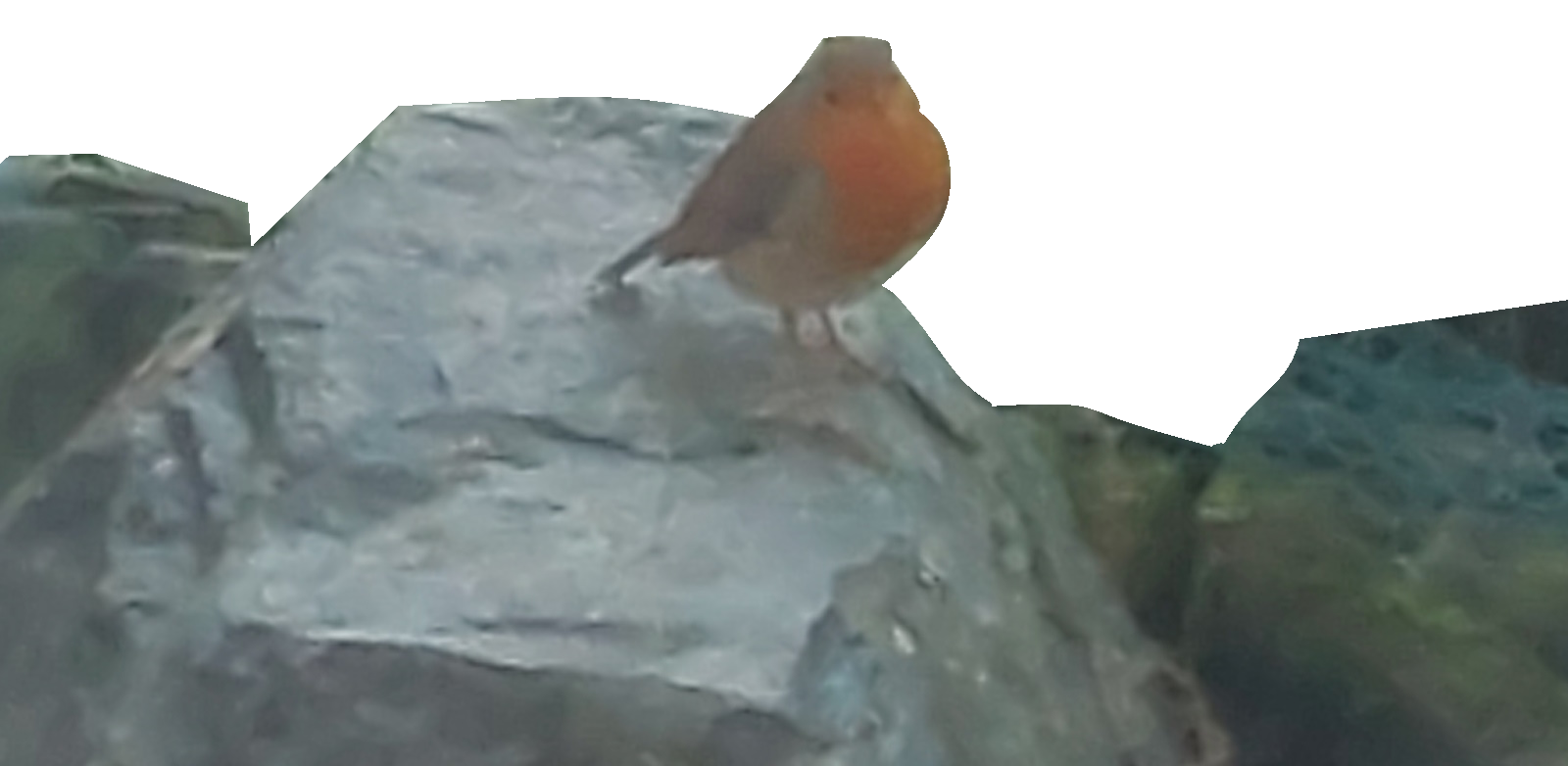
There's not been a heron come looking for fish. There are no fish to find. We get the occasinonal Wren hopping about in the leaves and rocks. The resident House Sparrows like the shrubs and there is a regular visiting Robin.
|
 |
|
On the water's edge:
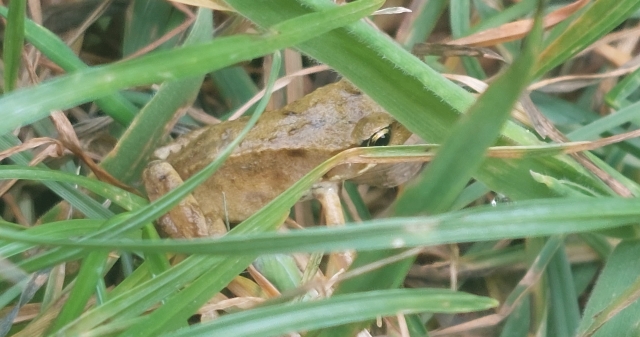
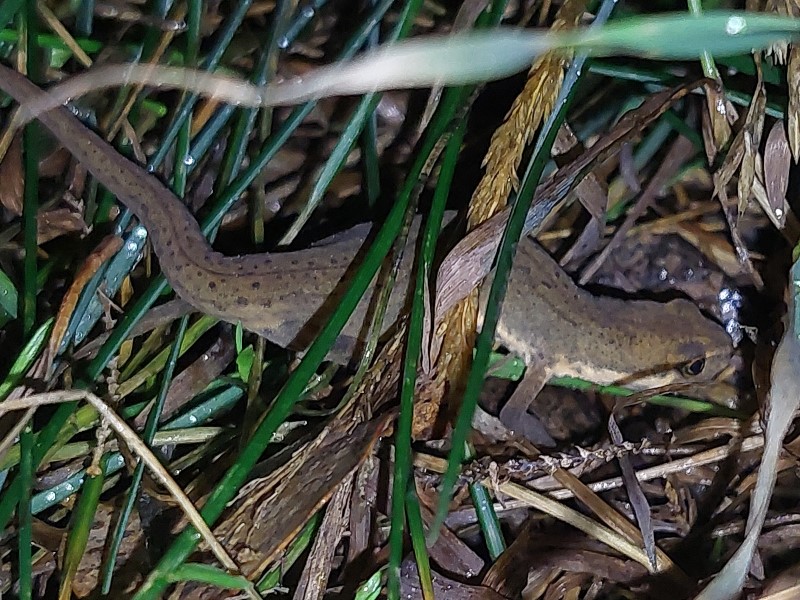
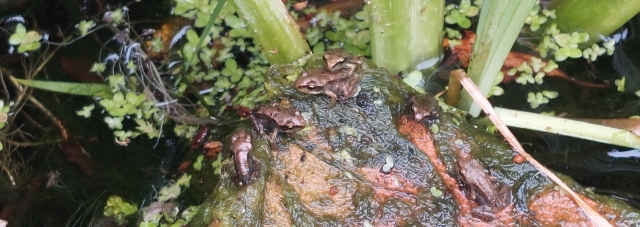
The Amphibians live in and out of the water depending on their life stage. Born fully aquatic before metamorphasis lets them move onto land. Once the frogs were developed enough to get out of the water the grass was full of them. The juvenile newt below was well camoflaged in leaf litter. I've seen springtails and isopods in the damp soil. They would make a nice snack for an amphibian before it settles down under a rock or branch. As it gets colder they are exploring less often. For the Frog much of adult life is on land. They return to the water to mate in the spring. I find more frogs out if it is raining.
|
|
|
The water's surface:Not tadpole anymore and not yet a full frog: these are froglets. A pile of bricks the stabilise the bog iris are a popular hang out of the Froglets as they can dissapear back underwater in a moment.
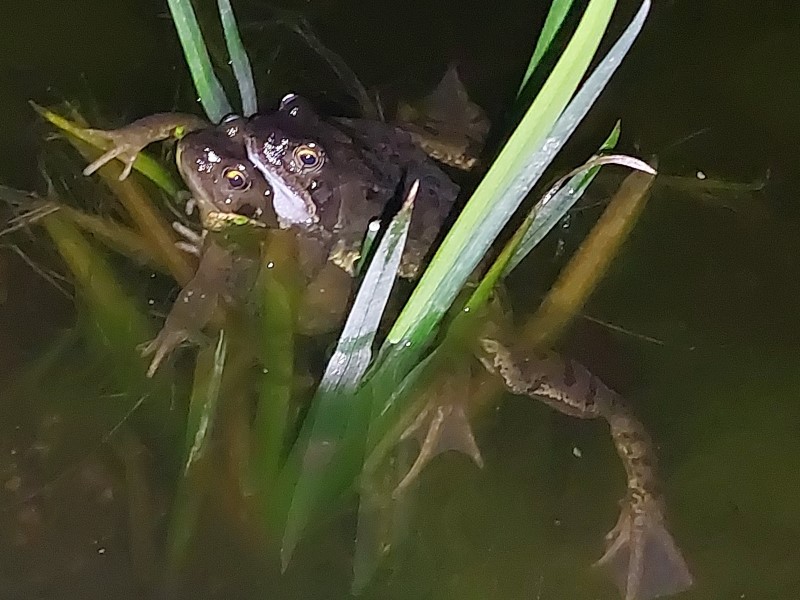
This pair making frogspawn.
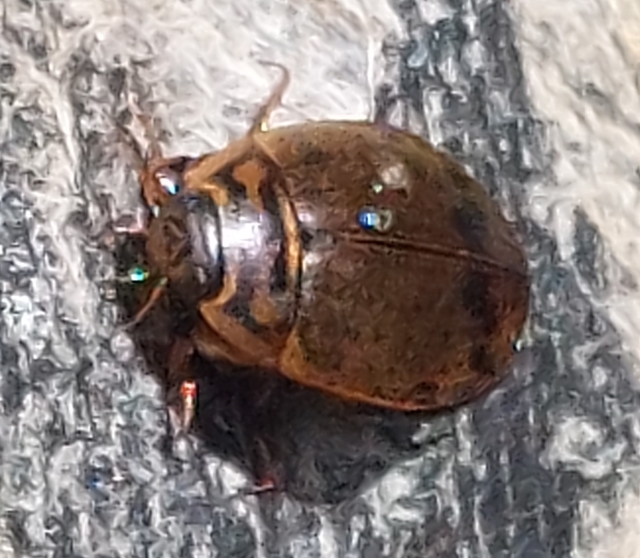
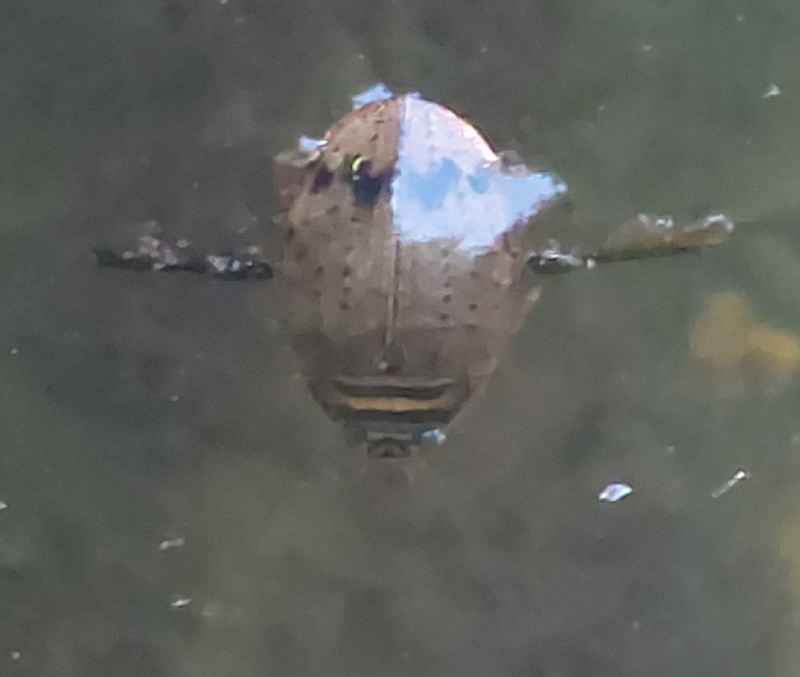
Many of the insects move between bodies of water by flying. This Lesser Diving Beetle might have been considering it before I startled it back into the water.
|
|
|
|
Every picture I have of the Lesser Diving Beetle hunting is a blurry mess so far. The one below was just floating for a moment. They are powerful hunters and faster than most other pond critters. Their larve look alien are strange with long necks and many limbs.
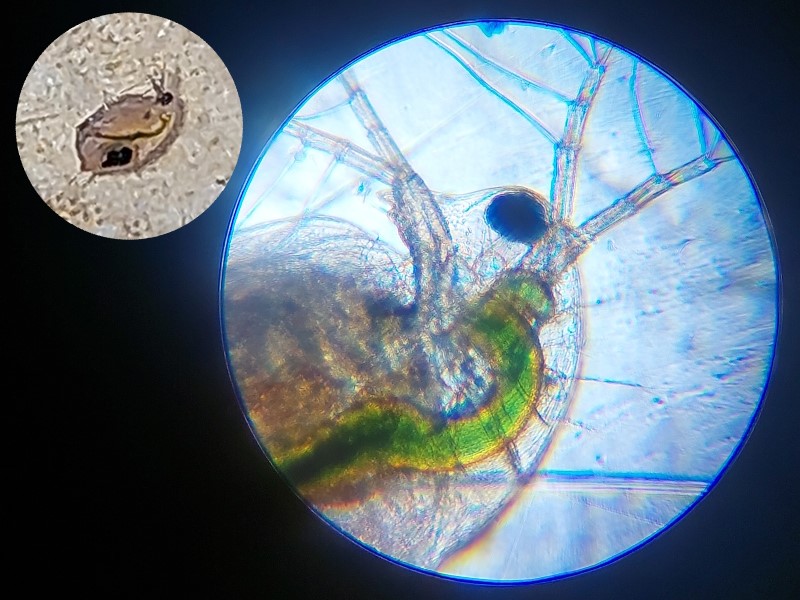
Daphnea (The Water Flea) is perfect for observing via microscope. The left image is a zoomed in photo with the dark dots of an eye at the top and a pair of eggs inside. As they are able to survive in a water drop trapped between glass slides I would watch the heart beating at the back of its head and the green algea its eaten.
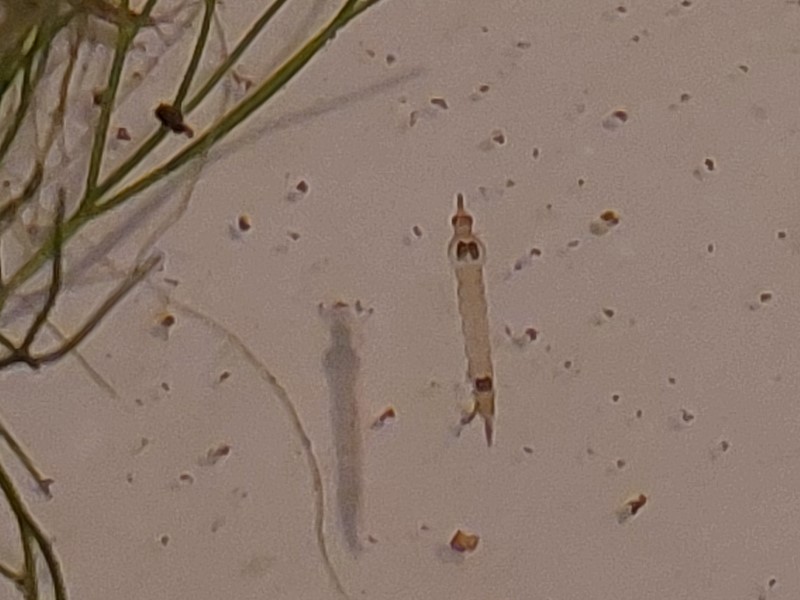
The Phantom Midge or Glass Worm will one day become a non-biting kind of Midge. There are some incredible close of photos of the translecent body linked here.
|
|
|
|
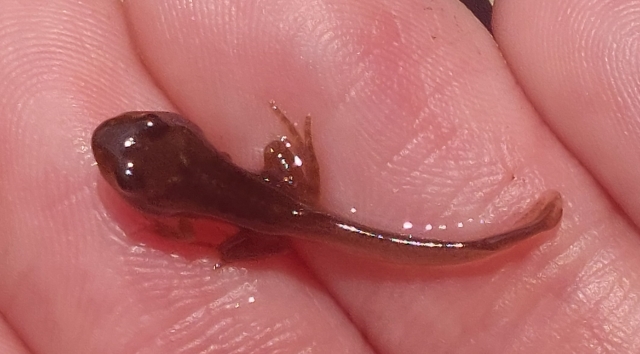
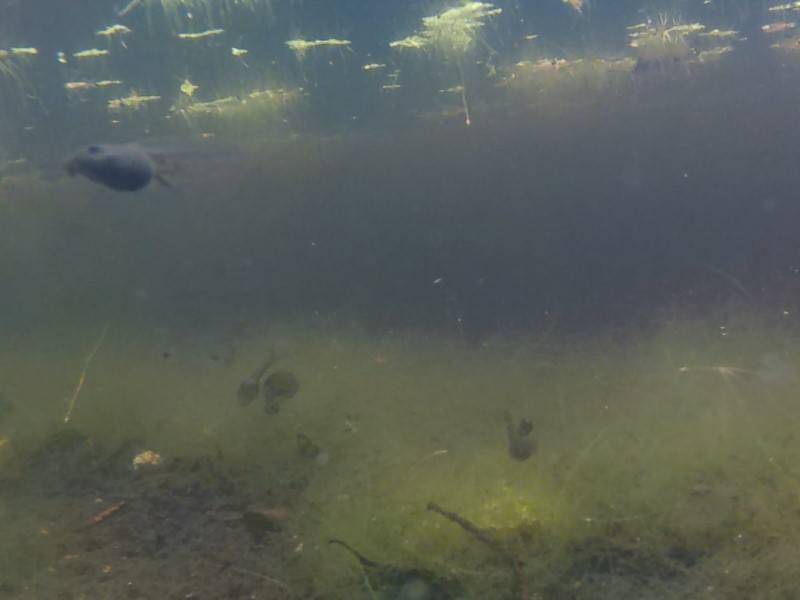
You'll see a lot of tadpoles in the underwater photos further down. Below is a leg-having one I caught just by hand.
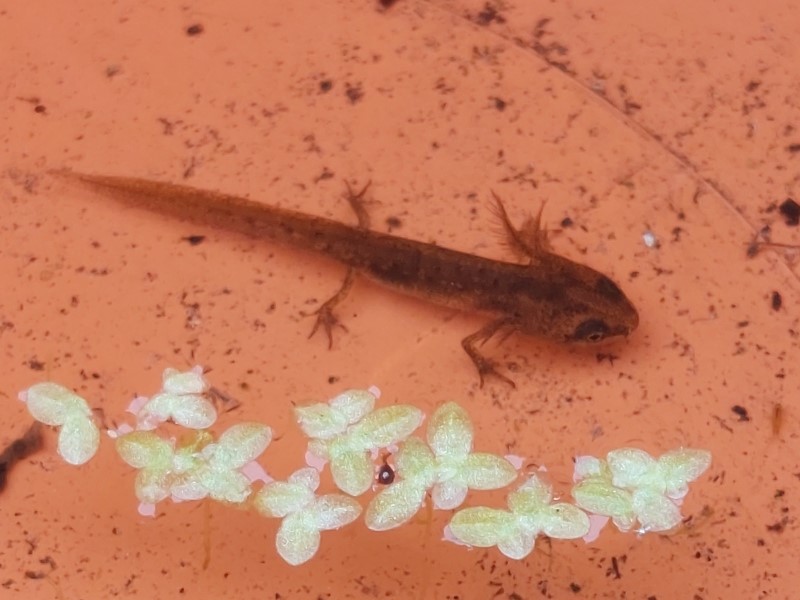
This precious critter is a larval Common Newt. Note the flufffy external gills. Most newts will lose them as they transition to land but a few can keep them. Their famous cousin the Axolotal keep them into adulthood.
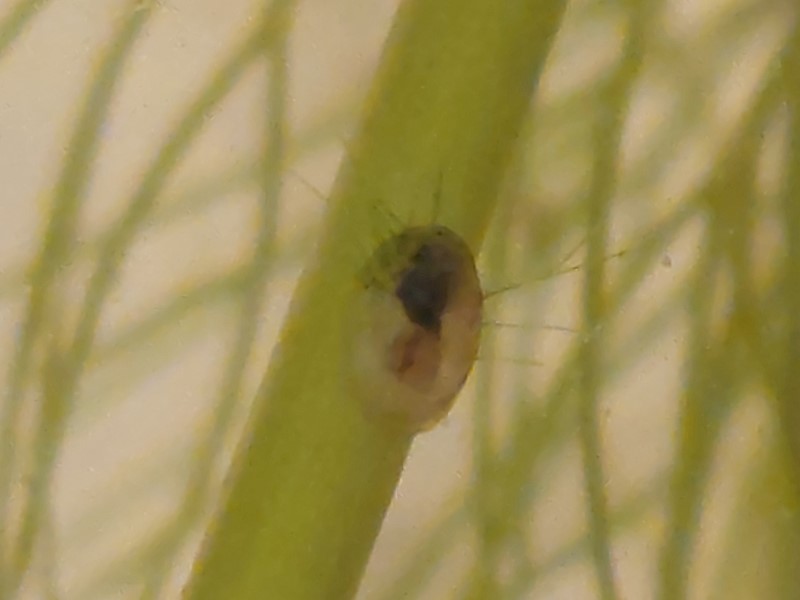
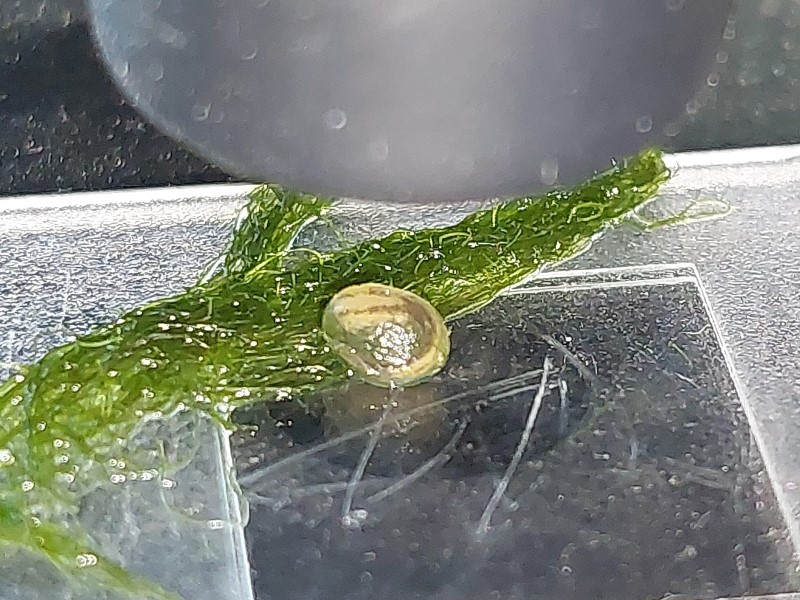
The freshwater limpet (probably in image below) typically grows to 3mm and prefers more oxygen so often clings to things closer to the surface. They do not have hairs so I think the lines on the shell are algea growing.
|
|
|
The sunny shelf:This pond has two depths. A shelf around 30cm deep (when there's not been rain) and a meter deep larger section.
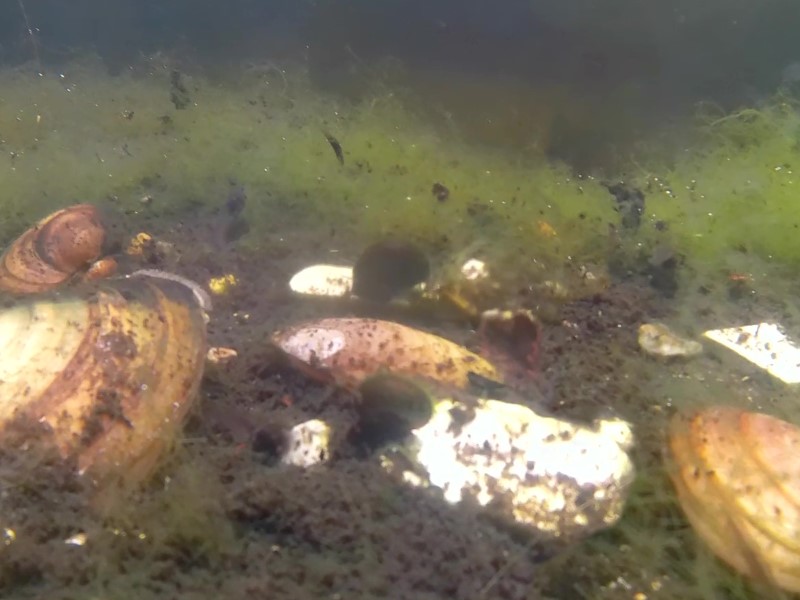
There are four kinds of freshwater mussel I purchased for the pond. The larger two in on the left are Swan Mussel is on the left and the Painters Mussel is in the middle and left. Duck Mussel and Pea Clam are not in the image above. The tiny pea clams have bred. The mussels require much more to breed. They have a paracitic phase where the babies cling to the gills of fish. I only had two of each mussel... and no fish.
Tadpoles, snails, and blanket weed drift around the placid water. |
|
|
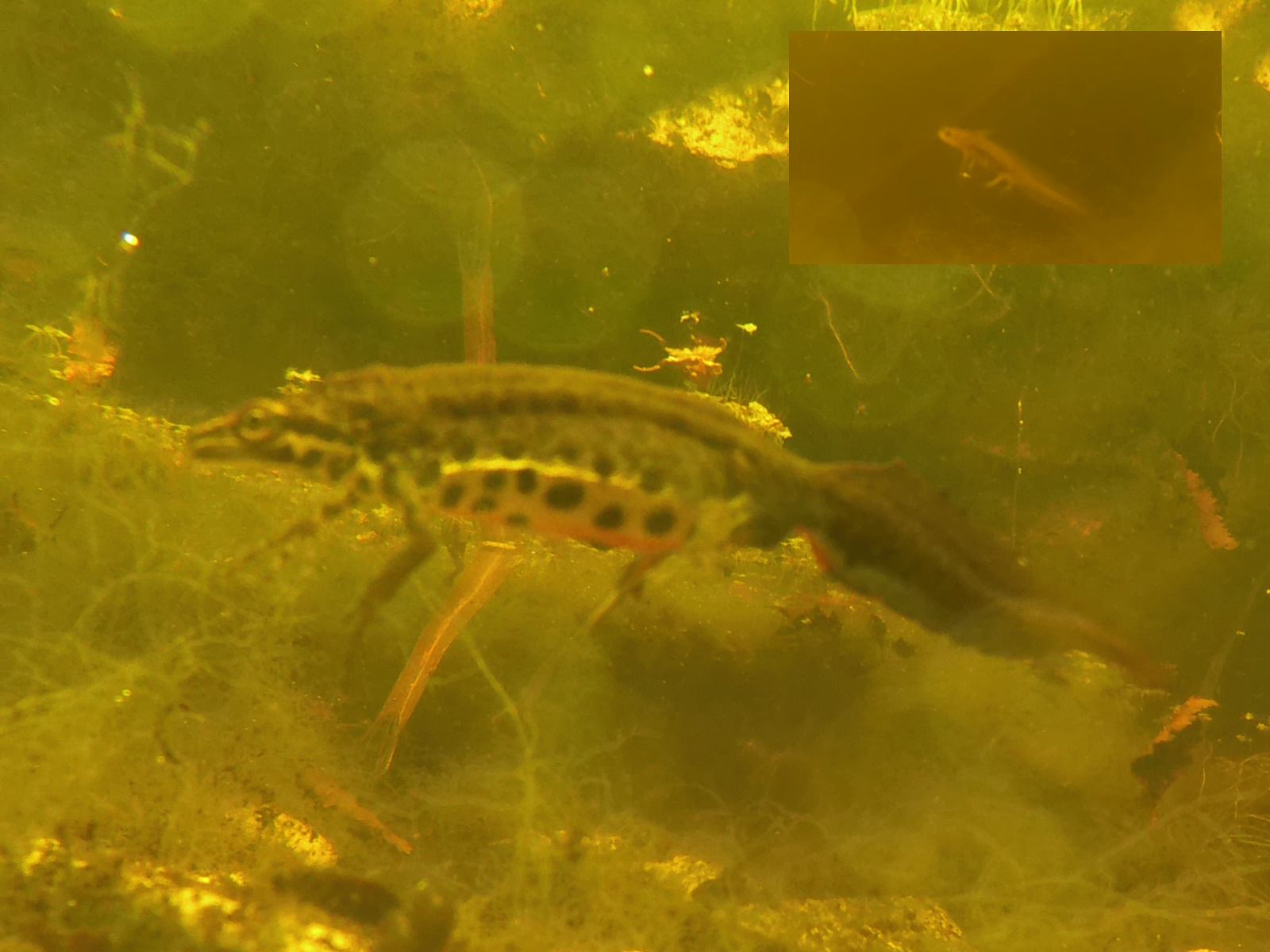
Mid Pond:Common Newt males grow a crest for breeding season. It's funny watching the boys chase the girls around to waft pheramones at them with their tails. Below is a male Common Newt with his crest. A larval newt the would have hatched the year before is added in the top right (not to scale exactly but estimated).
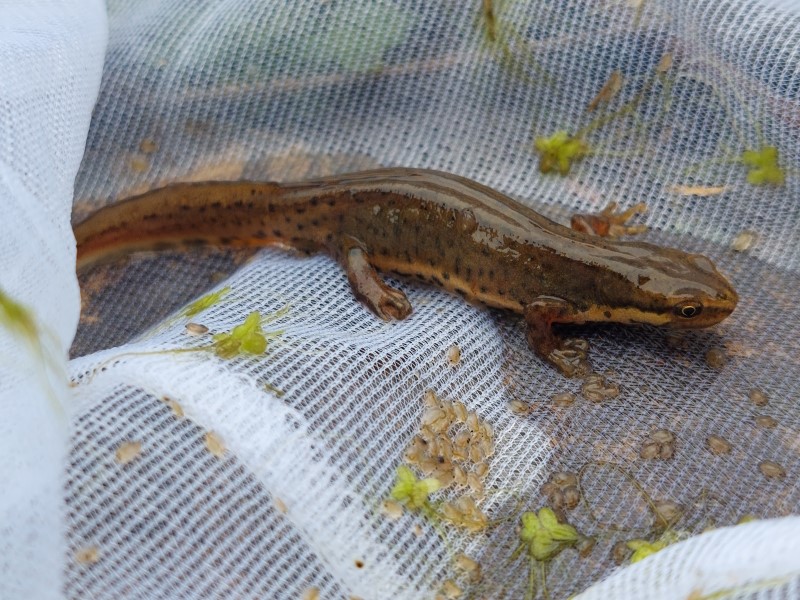
This female got caught up in my weeding net. I took a moment to appreciate her spots before returning her to the water.
Some of the stanger things pulled from my net: a Mayfly or Pond Olive larva. The plate-lik gills along its abdomen mean it is not a mayfly.
|
|
|
Getting in the weeds:I was not expecting the Newts to breed. Newts like to lay their eggs wrapped in a leaf. I don't have many plants so I found eggs in the blanket weed when I was removing it.It was incredible to see this. The embryo was mostly still but would thrash around occasionally.
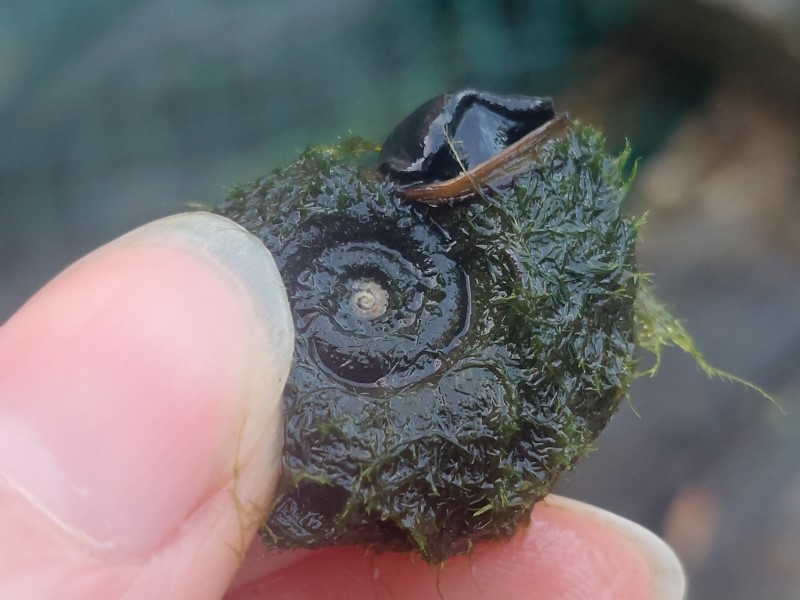
Snails are at every level sliding around the lining of the pond. Ramshorn Snails have been resident for over a year after a friend handed me a plastic tub of them. This one looks large enough it could be one of the original group who have estabished a strong population. |
|
|
|
Another strange flying-insect-to-be is this Damselfly Nymph. Based on what I witnessed hatch last year this may be another Large Red Damselfly.
The Seed Shrimp or Ostracod is a tiny tiny crustacean. They can grow up to 4mm long. This specimen was in a jug of 'empty' water I took for observation.
|
|
|
Deepest Silt:It's hard to know for sure what is down there without diping a net into the mud, disturbing all that live there. At times I have seen adult frogs settle down and I know some of the clams I purchased have travelled deeper as I see the siphons eating at times. BLOOD WORM
I found one of these in a scoop of silt and thought it was a bee. These are Broad Bodied Chaser Nympths on a rare trip to the waters edge. Dunno what they are doing. Didn't see them hatch.
|
|